


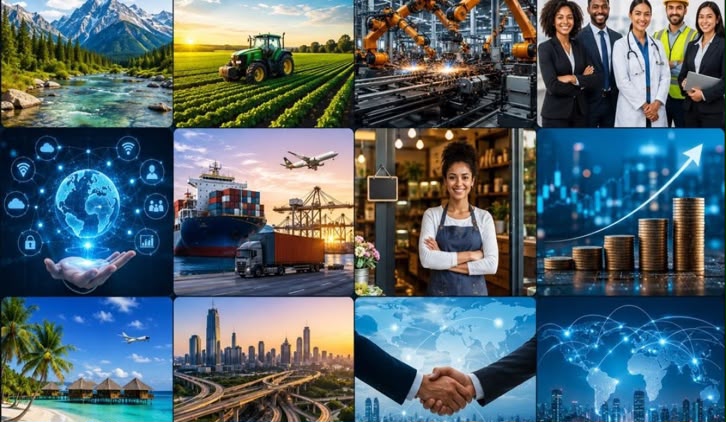
1. Natural Resources
Natural resources are among the most important sources of economic wealth. They include oil, natural gas, minerals, forests, fertile land, freshwater, and fisheries. Countries rich in natural resources can generate significant income through extraction, processing, and exportation. However, sustainable management is essential to prevent depletion and environmental damage.
2. Agriculture
Agriculture forms the backbone of many economies, especially in developing countries. It provides food, raw materials for industries, and employment opportunities. Major agricultural activities include crop cultivation, livestock farming, horticulture, and fishing. Modern farming techniques can greatly increase productivity and income.
3. Industry and Manufacturing
Manufacturing transforms raw materials into finished products, adding value and increasing economic output. Industries such as textiles, automobiles, electronics, pharmaceuticals, and construction materials contribute significantly to national income, exports, and job creation.
4. Human Capital
Human capital refers to the knowledge, skills, experience, and health of a country’s population. Educated and skilled workers enhance productivity, innovation, and economic growth. Investments in education, vocational training, and healthcare strengthen human capital and improve long-term prosperity.
5. Technology and Innovation
Technological advancement is a powerful driver of economic development. Innovations improve efficiency, reduce production costs, and create new markets. Sectors such as artificial intelligence, biotechnology, renewable energy, and information technology have become major sources of wealth in modern economies.
6. Trade and Commerce
Domestic and international trade enable countries to specialize in producing goods and services where they have a comparative advantage. Exports generate foreign exchange earnings, while imports provide access to products that are unavailable or expensive to produce locally. Efficient trade systems stimulate economic growth.
7. Entrepreneurship and Small Businesses
Entrepreneurs play a critical role in economic development by creating businesses, introducing new products, and generating employment. Small and medium-sized enterprises (SMEs) often constitute a large share of economic activity and contribute substantially to innovation and income generation.
8. Financial Services
Banks, insurance companies, investment firms, and capital markets facilitate the flow of money within an economy. They provide savings opportunities, loans, investment capital, and risk management services that support businesses and consumers, thereby promoting economic expansion.
9. Tourism
Tourism generates revenue through accommodation, transportation, food services, entertainment, and cultural activities. Countries with historical sites, natural attractions, and unique cultural heritage can benefit significantly from domestic and international tourism, creating jobs and supporting local communities.
10. Infrastructure Development
Well-developed infrastructure, including roads, ports, airports, railways, electricity, telecommunications, and water systems, increases productivity and attracts investment. Strong infrastructure lowers business costs and improves connectivity, making economic activities more efficient.
11. Foreign Direct Investment (FDI)
Foreign direct investment occurs when companies or individuals from one country invest in businesses or assets in another country. FDI brings capital, advanced technologies, managerial expertise, and access to global markets. It can accelerate industrialization and create employment opportunities.
12. Knowledge Economy and Digital Services
In the modern world, knowledge-based industries have become major sources of wealth. Digital marketing, software development, online education, e-commerce, freelancing, content creation, and cloud-based services allow individuals and countries to earn income with relatively low physical capital requirements. As internet access expands, the digital economy is expected to become increasingly important in shaping global prosperity.
Conclusion
Economic wealth is generated from a combination of natural, human, financial, technological, and institutional resources. Nations that effectively develop and manage these sources through good governance, education, innovation, and sustainable practices are more likely to achieve long-term economic growth and improved living standards for their populations.
Powering the Future Economy